

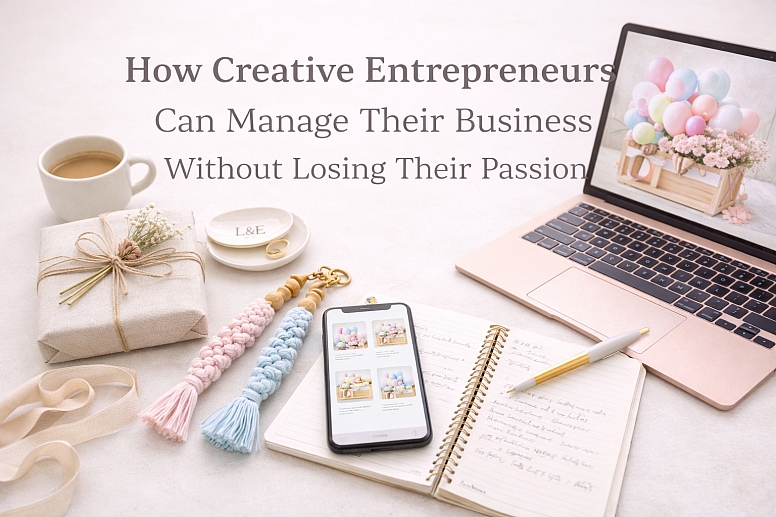
How Creatives Can Manage a Business Without Losing Passion
Creative entrepreneurs, makers, custom gift sellers, and DIY pros juggling orders across birthdays, weddings, and holidays often discover that managing a creative business can drain the very energy that started it. The core tension is simple: admin, pricing pressure, and messy money moments pile up, and the creative passion and business balance start to wobble.
These business challenges for creatives aren’t a character flaw; they’re a sign that the business side needs a clear container. With a steady creative professional workflow, the work stops feeling like constant catch-up and starts supporting income without stealing the joy.
Quick Summary of Key Takeaways
- Set clear, sustainable pricing so your creativity stays profitable and protected.
- Use simple contracts and invoices to streamline projects and reduce awkward money conversations.
- Build a workable creative-business workflow to stay organized without draining your energy.
- Organize finances with a lightweight system that makes tracking income and expenses feel manageable.
- Market authentically to attract the right buyers without sounding salesy or cringeworthy.
Set Up Your Creative Admin in One Simple Hour
This process helps you turn your creative energy into a repeatable, low-stress business system for pricing, contracts, invoices, workflow, and money tracking. If you are buying or making meaningful gifts, it matters because a clear system frees up time and focus for the fun part: designing, personalizing, and delivering something truly thoughtful.
- Choose a pricing baseline you can repeat
Start with one “starter price” for a common gift project you make often, then list what is included (materials, customization, revisions, delivery). Adjust once per quarter rather than every order, remembering that post-pandemic increases averaging 8% annually can affect what customers expect to pay for skilled work. - Send invoices from a template, same day
Build one invoice template with your name, the item description, due date, total, and how to pay, then duplicate it for every order. Add a simple invoice rule like “invoice sent within 2 hours of approval” so you do not rely on memory when you are busy creating. - Map your gift-making workflow from request to delivery
Write your workflow as 5 to 7 checkpoints, such as intake, concept, proof, production, packaging, pickup or shipping, and follow-up. A creative workflow helps teams move from idea to final asset with fewer delays and more consistency, and solo makers benefit from the same clarity. - Track money weekly with two lists only
Keep one list for income (date, client, project, amount) and one for expenses (date, vendor, category, amount), then review both every Friday for 10 minutes. This keeps taxes and budgeting simple, and it also tells you which gift styles are actually profitable.
Market Like a Human: Portfolio, Proof, and Gentle Outreach
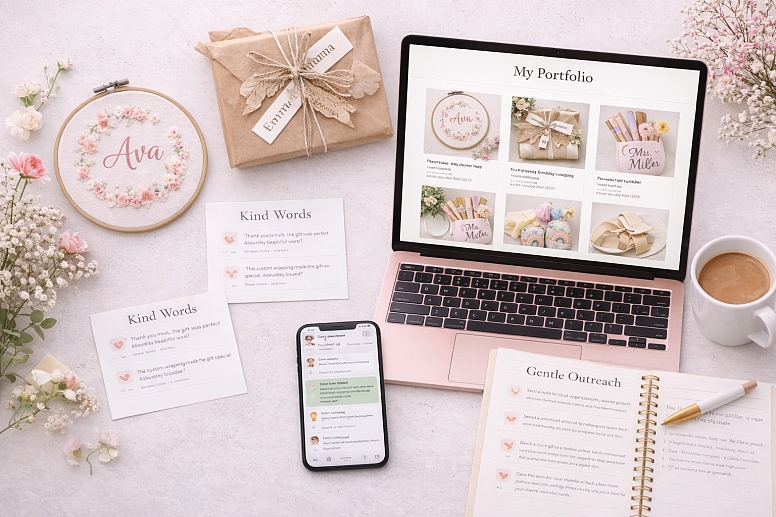
Authentic marketing for creatives isn’t about shouting louder; it’s about making it easy for the right people to understand what you make, how it helps, and how to buy from you without pressure.
- Build a “tiny but mighty” portfolio (6 pieces max): Pick 3–6 examples that match what gift buyers actually search for, “custom baby name hoops,” “eco-friendly birthday wrapping,” “personalized teacher gifts.” For each piece, add a one-line outcome (who it was for/occasion), 2–3 process notes (materials, timing), and a clear starting price that matches the pricing template you set up in your admin hour. This works because beginners don’t need to see everything you’ve ever made; they need to recognize their occasion and trust you can repeat the result.
- Create a repeatable brand “recipe” you can execute in 10 minutes: Choose 2 colors, 1 font style, and 1 photo rule (e.g., “natural window light + hands in frame” or “plain background + one prop”). Save a simple caption formula you can reuse: Who it’s for + what problem it solves + what to do next. Consistent creative branding builds familiarity fast, and it saves you from reinventing your look every time you post.
- Turn social proof into a system, not a scramble: After every delivery, send a two-question message: “What occasion was this for?” and “What did the recipient say/do?” Then ask permission to share their words and photos. Screenshot responses into a folder labeled by product type so you can quickly drop proof into listings, invoices, and future pitches. This is social proof in a creative business that feels real because it’s specific.
- Make a “trust page” using what you already have: Put three things in one place (a pinned post, a single page, or a simple PDF): your 6-piece portfolio, 3 testimonials, and your buying steps (deposit, timeline, revision limits) pulled from your workflow/contract notes. This reduces back-and-forth and protects your time because clients self-qualify before they message.
- Do gentle outreach that sounds like connection, not selling: Start with 10 minutes weekly: list 5 local organizations, parent groups, clubs, or event planners who serve gift-heavy moments (graduations, weddings, baby showers). Send a short note that offers help and a clear option to decline. Sales outreach works best when it’s about connecting with potential clients rather than pushing a product. Example: “Hi __, I loved your recent __ event. If you ever need small-batch personalized favors (names/dates) with eco-friendly packaging, I can share 2–3 options and turnaround times, no rush if it’s not a fit.”
- Use “research first” before any pitch (and track it like a mini budget line): Spend 5 minutes learning one detail, what they sell, their audience, their upcoming dates, then tailor one sentence to that. A stat like 202% higher conversion rates for research-backed outreach is a good reminder that specificity is not extra work; it’s the work. Track outreach time and results the same way you track expenses: it helps you double down on what brings in calm, aligned orders.
Common questions creative entrepreneurs ask
Q: How can I set fair prices for my creative work without feeling uncertain or undervaluing myself?
A: Start with a simple baseline: materials + your time (hourly rate) + overhead, then add profit. Use a “starting at” price and define what it includes so gift buyers know what to expect. Confidence comes from consistency, so don’t renegotiate your rate mid-project; only adjust scope.
Q: What are simple ways to create contracts and invoices that protect my time and ensure clear agreements?
A: Keep it one page: deliverables, timeline, revision limit, and a clear “what counts as a change request.” Require a deposit to book the date and put the remaining payment milestones in writing. Add a single line on rush fees or late approvals to prevent last-minute chaos.
Q: How do I maintain an easy-to-follow workflow that keeps me organized without draining my creative energy?
A: Use one repeating checklist for every order: inquiry, quote, deposit, create, approval, deliver, follow-up. Batch admin into a short weekly slot and track only three numbers each week: money in, expenses out, and hours worked. That small financial snapshot keeps your decisions calm and clear.
Q: What strategies can I use to market my creative offerings authentically without feeling pushy or salesy?
A: Treat marketing like helpful signposting: show who it’s for, what it solves, and how to order. Because most online marketing strategies convert at 1-2% on average, focus on steady, low-pressure posting instead of chasing perfection. Invite conversations with “If you want help choosing a meaningful gift, message me your occasion and budget.”
Q: If I’m feeling overwhelmed trying to balance the creative and organizational parts of my projects, what resources can help me build confident, clear systems?
A: Pick one structured learning path that covers pricing, boundaries, and basic bookkeeping, then implement one tool per week, and if you're exploring a business bachelor degree online, keep it simple and structured. Pair it with a monthly 30-minute “systems reset” where you update templates, review what took the most time, and tighten your scope rules. Simple routines protect your passion because they reduce decision fatigue.
Simple Systems That Protect Your Creativity and Cash Flow
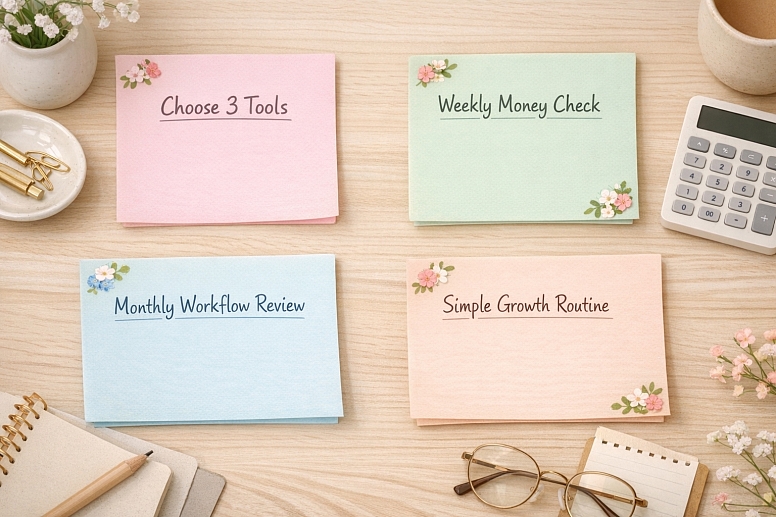
Running a creative business can feel like choosing between making what you love and managing what you sell. The steadier path is a light, repeatable approach: use foundational business tools, keep a gentle pulse on your numbers, and treat your process like something worth protecting. When that becomes normal, decisions get clearer, projects stay scoped, and sustainable creative business practices leave more energy for the work itself, supporting long-term success for creatives.
A simple system keeps your passion from paying the price. Choose 3 tools, schedule one monthly creative workflow review, then expand one business growth routine at a time. That consistency builds stability and resilience so the creative work can stay joyful and sustainable.
Recent Posts











0.0343