

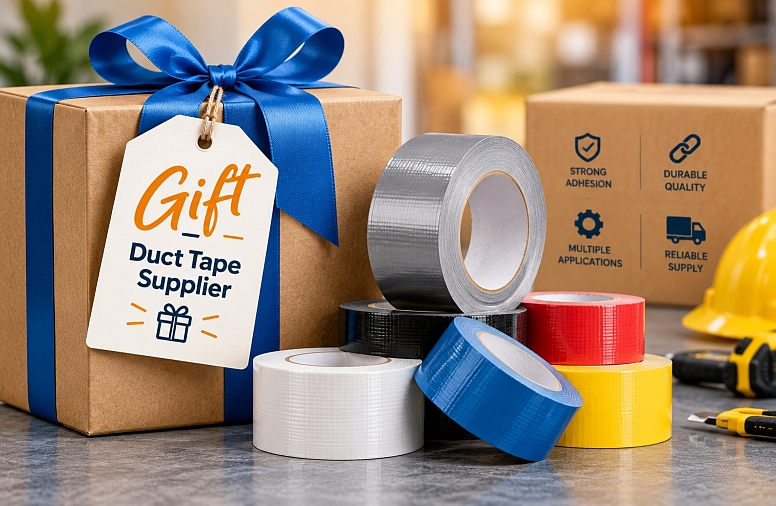
Top Factors to Consider When Selecting a Duct Tape Supplier
Choosing the right duct tape supplier can significantly affect product quality, operational efficiency, and overall business costs. Whether you need duct tape for industrial applications, packaging, construction, maintenance, or everyday commercial use, the supplier you choose plays an important role in ensuring consistent performance and reliable delivery.
While duct tape may seem like a simple product, its quality can vary depending on adhesive strength, backing material, durability, and intended application. A supplier offering low prices may not always provide the consistency or technical support your business requires.
For this reason, businesses should evaluate more than just the product's price when selecting a supplier. Factors such as product quality, customization options, delivery reliability, and industry experience can help you establish a long-term and productive partnership.
Choosing the right gifts for any occasion is easier when you know what to look for in terms of quality, practicality, and presentation. Whether you're shopping for birthdays, holidays, special celebrations, or thoughtful everyday surprises, finding products that suit the recipient's needs and preferences can make all the difference. From unique gift ideas to useful everyday essentials, exploring a variety of options helps you find something memorable for friends, family, or colleagues. Paying attention to product quality, value, and versatility can help you make a thoughtful choice that feels both personal and practical.

Let's look at the key factors to consider when choosing a reliable duct tape supplier and how to make a purchasing decision that supports your business goals.
1. Evaluate Product Quality and Performance
Product quality should be one of the first factors to consider when selecting a duct tape supplier. Different applications require different levels of strength, adhesion, flexibility, and resistance to environmental conditions.
For example, duct tape used in construction or industrial maintenance may need to withstand rough handling, moisture, temperature fluctuations, or demanding working environments. On the other hand, packaging and general-purpose applications may require a different combination of adhesion and flexibility.
Before placing an order, ask the supplier about the technical specifications of the tape, including:
- Adhesive strength and holding power
- Backing material and thickness
- Tensile strength and tear resistance
- Temperature and moisture resistance
- Available widths, lengths, and colors
A dependable supplier should be able to provide clear product information and, where appropriate, technical documentation or samples. Testing the tape in your actual application can also help you determine whether it meets your performance expectations.
Consistent quality is especially important for businesses that purchase duct tape in bulk. Variations between batches can affect production processes, maintenance work, and customer satisfaction.
2. Consider the Supplier's Industry Experience
Experience is another important consideration when choosing a duct tape supplier. A supplier with knowledge of industrial tapes and adhesive products may be better positioned to understand the specific requirements of different industries.
For instance, a manufacturing company may need duct tape for temporary repairs, surface protection, or general maintenance. A construction business might require durable tape for sealing, bundling, or installation-related tasks. Each application can have different performance expectations.
An experienced supplier should be able to explain the differences between available products and help you identify suitable options based on your intended use.
However, don't judge experience solely by how many years a company has been operating. Consider its product knowledge, customer service, quality control processes, and ability to handle your order requirements.
Helpful questions to ask:
- Does the supplier serve businesses in your industry?
- Can they explain product specifications clearly?
- Do they offer technical assistance when required?
- Can they provide references or relevant business experience?
Working with a knowledgeable supplier can make product selection easier and reduce the risk of purchasing unsuitable materials.
3. Check Adhesive Technology and Material Specifications
Not all duct tapes are designed with the same adhesive technology or backing materials. Understanding these differences is essential when selecting a product for a particular purpose.
Duct tape may feature different types of adhesive systems, including rubber-based or synthetic adhesive formulations. The appropriate option depends on factors such as the surface, application environment, required holding power, and removal expectations.
The tape's backing material also influences its performance. Some products are designed for flexibility, while others prioritize durability or resistance to specific conditions.
When evaluating a supplier, request detailed information about the products they offer. This information can help you compare options and determine whether the tape is suitable for your application.
A supplier that provides transparent specifications demonstrates a more structured approach to product selection. It also makes it easier for purchasing teams to communicate requirements and maintain consistency across future orders.
4. Review Product Range and Customization Options
Businesses often have different tape requirements depending on their operations. Selecting a supplier with a broad product range can simplify purchasing and reduce the need to coordinate with multiple vendors.
A reliable supplier may offer duct tape in various sizes, colors, thicknesses, and performance categories. The availability of these options allows businesses to select products according to their application and operational needs.
Customization can also be valuable for companies with specific requirements. Depending on the supplier's capabilities, options may include customized dimensions, packaging formats, or other product specifications.
For example, a manufacturing business purchasing large quantities of tape may need specific roll sizes to match its workflow. A distributor may require different packaging configurations for retail or commercial customers.
Before choosing a supplier, confirm whether it can support your current needs and potential future requirements.
If you are looking for a supplier for recurring orders, ask about minimum order quantities, customization feasibility, lead times, and sample availability. These details can help you avoid unexpected limitations after placing an order.
5. Compare Pricing Without Compromising Quality
Price is an important part of any purchasing decision, but it should not be the only factor used to compare suppliers.
The lowest-priced duct tape may not always provide the performance, consistency, or durability needed for your application. If the tape fails prematurely, your business may face additional material costs, labor expenses, or operational delays.
Instead of comparing only the price per roll, consider the overall value offered by the supplier.
Factors worth evaluating include:
- Product quality and expected performance
- Cost per roll or unit
- Bulk order discounts
- Shipping and delivery charges
- Product consistency
- Replacement or complaint-handling policies
For example, a slightly more expensive tape that performs consistently may offer better value than a cheaper product that requires frequent replacement.
A transparent supplier should clearly communicate pricing, payment terms, and any additional charges before the order is finalized. Requesting quotations from multiple suppliers can help you understand market pricing and compare the products on a like-for-like basis.
6. Assess Supply Capacity and Delivery Reliability
Consistent supply is essential for businesses that depend on duct tape for manufacturing, maintenance, packaging, or distribution.
Even a high-quality product can create operational challenges if the supplier cannot deliver it on time. Delays may interrupt workflows, affect project schedules, or force businesses to purchase alternative products at short notice.
When evaluating a supplier, ask about its inventory availability, production capacity, order processing time, and delivery arrangements.
If your business places recurring or bulk orders, confirm whether the supplier can manage your expected volume. It is also useful to discuss how the supplier handles unexpected demand or stock shortages.
A reliable supplier should communicate realistic delivery timelines rather than making promises that cannot be consistently fulfilled.
Building a relationship with a supplier that understands your purchasing schedule can help improve planning and reduce supply-related disruptions.
7. Examine Quality Control and Product Consistency
Quality control is particularly important when purchasing adhesive tapes in commercial or industrial quantities. Inconsistent products can create problems even when the initial sample performs well.
Ask the supplier about its quality inspection procedures and how it maintains consistency across production batches. Depending on the product and application, relevant checks may include adhesive performance, dimensions, backing quality, and packaging condition.
You may also want to understand whether the supplier provides batch information or supporting documentation where applicable.
Businesses with strict quality requirements should establish clear product specifications before entering into a long-term purchasing arrangement. Sample testing and periodic quality reviews can help confirm that delivered products continue to meet agreed expectations.
A supplier that takes quality control seriously can contribute to more predictable purchasing and operational outcomes.
8. Look for Responsive Customer Support
Good customer service can make the purchasing process easier, particularly when you have questions about product selection, technical specifications, or delivery schedules.
A responsive duct tape supplier should be able to communicate clearly and address concerns within a reasonable timeframe. This is especially useful when you need assistance selecting the right tape for an unfamiliar application.
Before committing to a supplier, pay attention to how the company handles your initial inquiries. Does it provide complete answers? Are product details easy to understand? Does the sales team follow up professionally?
Customer support also matters when something goes wrong. Ask about the process for handling damaged products, incorrect orders, quality concerns, or delivery issues.
A supplier that values long-term business relationships will typically prioritize clear communication and practical solutions.
9. Verify Reputation and Customer Feedback
A supplier's reputation can provide useful insights into its reliability and customer experience. Although online reviews should not be the only basis for your decision, they can help you identify recurring patterns in service quality.
Look for information about the supplier's product consistency, delivery performance, communication, and complaint resolution.
You can also request references from existing business customers, where available. Speaking with other buyers may help you understand how the supplier performs in real-world purchasing situations.
When reviewing feedback, consider whether the customer had requirements similar to yours. A supplier that works well for small retail orders may have different capabilities from one that specializes in large industrial shipments.
Conducting basic supplier verification before placing a significant order can reduce purchasing risks and support a more informed decision.
10. Prioritize Long-Term Partnership Potential
Selecting a duct tape supplier should not be viewed as a one-time purchasing decision, especially if your business requires regular orders.
A dependable supplier can become a valuable part of your procurement process by providing consistent products, predictable delivery, and responsive communication.
Over time, a strong supplier relationship may make it easier to plan inventory, discuss customized requirements, and manage repeat purchases. You may also benefit from clearer purchasing terms and improved coordination.
However, long-term partnerships should be built on measurable performance rather than assumptions. Review the supplier's delivery consistency, product quality, pricing, and service regularly.
If the supplier continues to meet your requirements, maintaining the relationship can support smoother purchasing operations.
Selecting a reliable duct tape supplier requires more than comparing prices. Product quality, adhesive performance, industry experience, customization options, delivery reliability, and customer service all play a role in determining whether a supplier is suitable for your business.
By evaluating these factors carefully, you can identify suppliers that align with your technical requirements, purchasing volumes, and long-term operational goals.
Whether you are sourcing duct tape for industrial maintenance, construction, packaging, or commercial use, taking the time to assess your options can help reduce unnecessary costs and improve purchasing confidence.
The right supplier is one that consistently delivers products and services that meet your business requirements. A structured evaluation process can help you build a dependable supply chain and establish a partnership that supports your business as it grows.
Recent Posts











0.0575